
CBD Marketing: What Works When You Can’t Buy Ads

Thanks for reading! I hope you enjoyed reading and learning more about digital marketing, SEO, and how to increase your visibility online.
Author: Patrick Michaels | Lead Content Strategist at Search Miners
Marketing a CBD or hemp brand means giving up the tools most online brands start with. Google and Meta allow only a narrow slice of CBD ads. Some payment processors, email platforms, and marketplaces have their own restrictions. And buyers come in skeptical, because the category has had plenty of bad actors.
The brands that grow anyway tend to do the same few things well. This is the playbook we use.
Start with what you can’t do
Before building a plan, know the walls:
- Paid search and paid social are mostly closed. Ingestible CBD can’t be advertised on Google or Meta. Topical CBD can, in limited cases, with certification. Here’s exactly what Google and Meta allow
- Health claims are off limits. Saying a product treats, cures, or prevents a condition invites FDA warning letters and FTC trouble.
- Federal rules are shifting. A narrower federal definition of hemp takes effect November 12, 2026. It measures total THC, including THCA, and caps finished products at 0.4 milligrams of total THC per container. Ask a lawyer how it affects your catalog before you plan campaigns around specific products.
- States set their own rules. What you can sell and say varies by state, and your site has to account for that.
Every channel below works inside those limits.
1. Make your product pages rank
Organic search is the largest channel nobody can shut off. People search for “CBD flower,” “hemp flower,” “CBD gummies,” and thousands of related terms. The question is whether your pages show up. It’s the core of how we approach SEO for CBD and cannabis brands .
Most CBD sites we audit have the same problem. Category and product pages are a grid of products with a sentence or two of copy. Google has nothing to work with, and neither does a buyer.
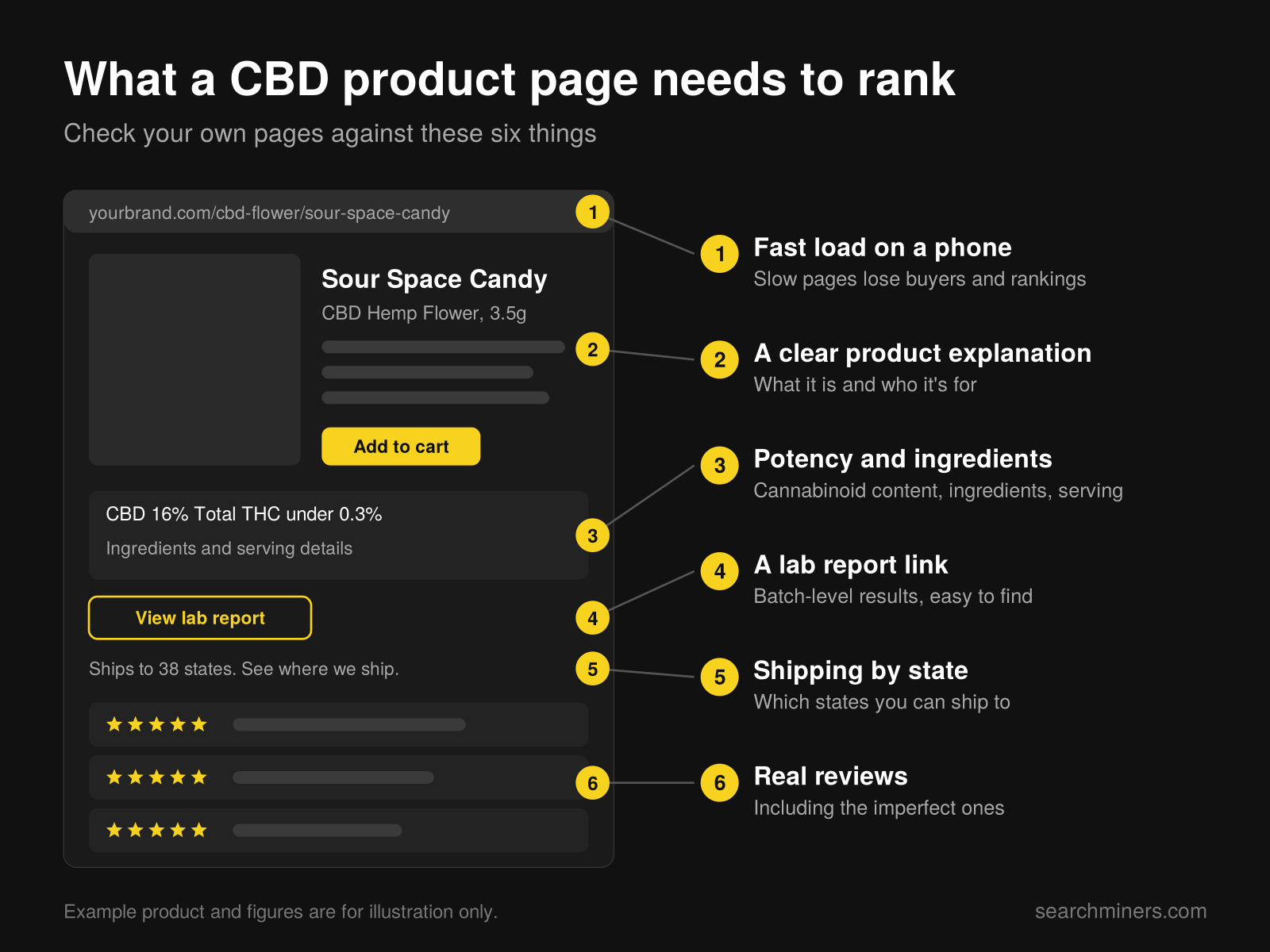
A page that ranks usually has:
- A clear explanation of what the product is and who it’s for
- Potency, ingredients, and serving information
- A link to the lab report for that batch
- Shipping details, including which states you can ship to
- Real reviews
- Fast load times on a phone
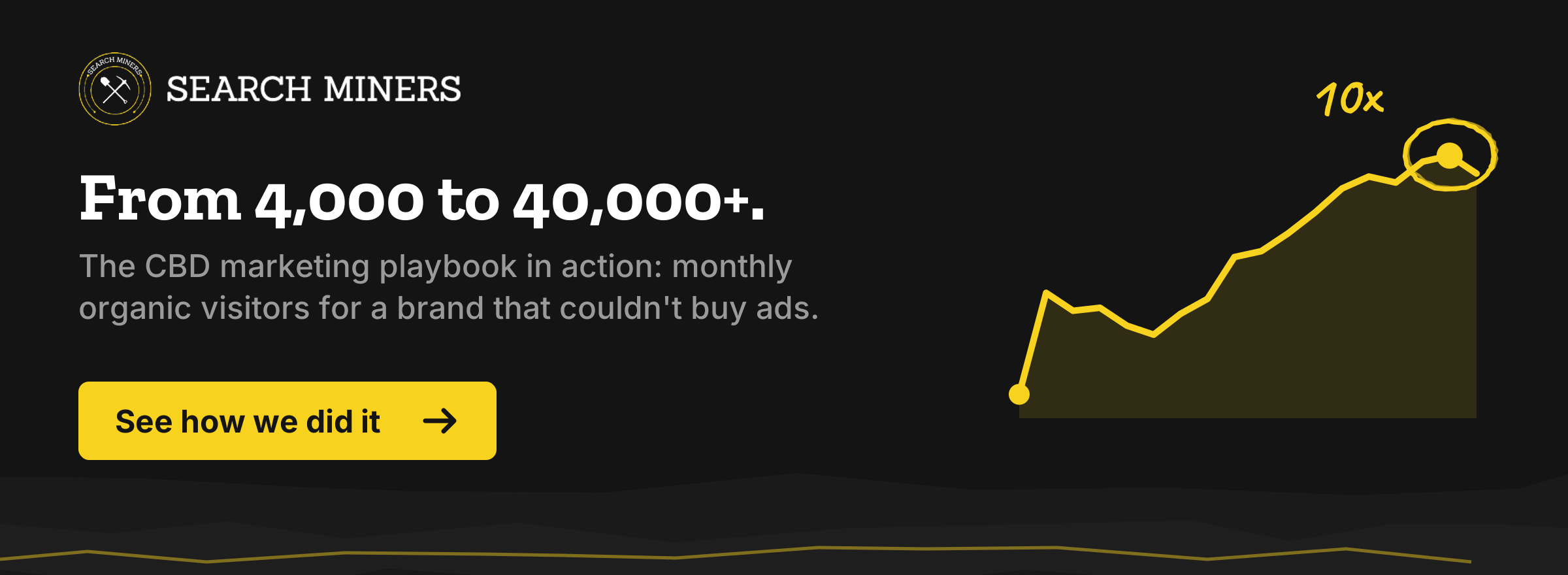
On one national CBD brand, rebuilding these pages was the biggest single factor in reaching #1 for “CBD flower,” “hemp flower,” and “CBD hemp flower.” Engagement went up, rankings followed, and organic traffic grew about tenfold at its peak. Read the full case study
2. Write content that earns trust without making claims
Educational content brings in buyers who are still researching. It also gives other sites a reason to link to you. The hard part is staying useful without crossing into medical claims.
Topics that work:
- How your products are made, from farm to extraction to testing
- How to read a certificate of analysis
- The difference between full-spectrum, broad-spectrum, and isolate
- How to choose a product type and serving size
- What the current laws mean for buyers in plain language
Topics to avoid or handle carefully: anything framed around a disease or condition. Describe what’s in the product and how people use it. Don’t promise outcomes.
3. Build authority off your site
Google is cautious with health-adjacent categories. It wants to see that other trusted sites vouch for you. For CBD, that means earning mentions and links from wellness, alternative health, and cannabis publications, plus broader news coverage when you have a real story.
This takes work. Many publishers won’t touch cannabis at all. The ones that will tend to care about original data, a founder with expertise, or a story about sourcing and quality.
4. Own your customer list
Email and SMS are where repeat revenue comes from. Capture emails at checkout and with a reason to sign up, like early access or education. Check your provider’s content rules before you start, since some restrict CBD. For texting, make sure your consent process follows federal rules.
5. Make trust visible everywhere
CBD buyers look for reasons not to trust you. Give them reasons to stay:
- Batch-level lab results that are easy to find
- A clear return policy
- Real customer reviews, including imperfect ones
- An About page with real people and real sourcing details
- Plain answers about shipping and legality by state
These help conversion directly, and they help rankings too, because Google weighs trust heavily in this category.
6. Show up in AI search
More buyers now ask ChatGPT, Gemini, or Perplexity which CBD brand to buy. Those tools pull from pages that answer questions clearly and from brands that other sites mention. The same work that helps you rank on Google helps here: clear product information, structured data, and outside mentions. Nobody can guarantee an AI tool will recommend you, but you can make it easier.
What about hemp marketing?
Non-CBD hemp products, like hemp seed foods, fiber, and textiles, face far fewer restrictions. If your brand sells both, keep those product lines clearly separated on your site. It keeps compliance simpler and gives you more room to advertise the hemp products that qualify. If you also sell through your own stores, these dispensary marketing ideas apply there too.
Frequently asked questions
What is the best marketing channel for CBD brands?
For most brands, organic search. It’s large, it isn’t subject to ad approvals, and the traffic keeps coming once you rank.
Can CBD brands use influencers?
Yes, with care. Influencers must disclose paid relationships under FTC rules, and they can’t make health claims on your behalf any more than you can.
How long does CBD SEO take?
Expect early movement in three to six months. Competitive terms can take longer. Our CBD client reached #1 for its top terms in about nine months.
Need help with CBD marketing?
We help CBD and hemp brands grow through search when the ad platforms won’t. Meet with one of our experts or see our work with CBD and cannabis brands
This article is general information and isn’t legal advice. Check current federal and state rules for your products.
About Patrick Michaels
Patrick Michaels
Patrick brings 10+ years of SEO expertise and 15+ years of professional writing experience to the Search Miners team. He specializes in creating clear, actionable content strategies that drive real business growth.


