
How a National CBD Brand Reached #1 for “CBD Flower” With No Paid Ads
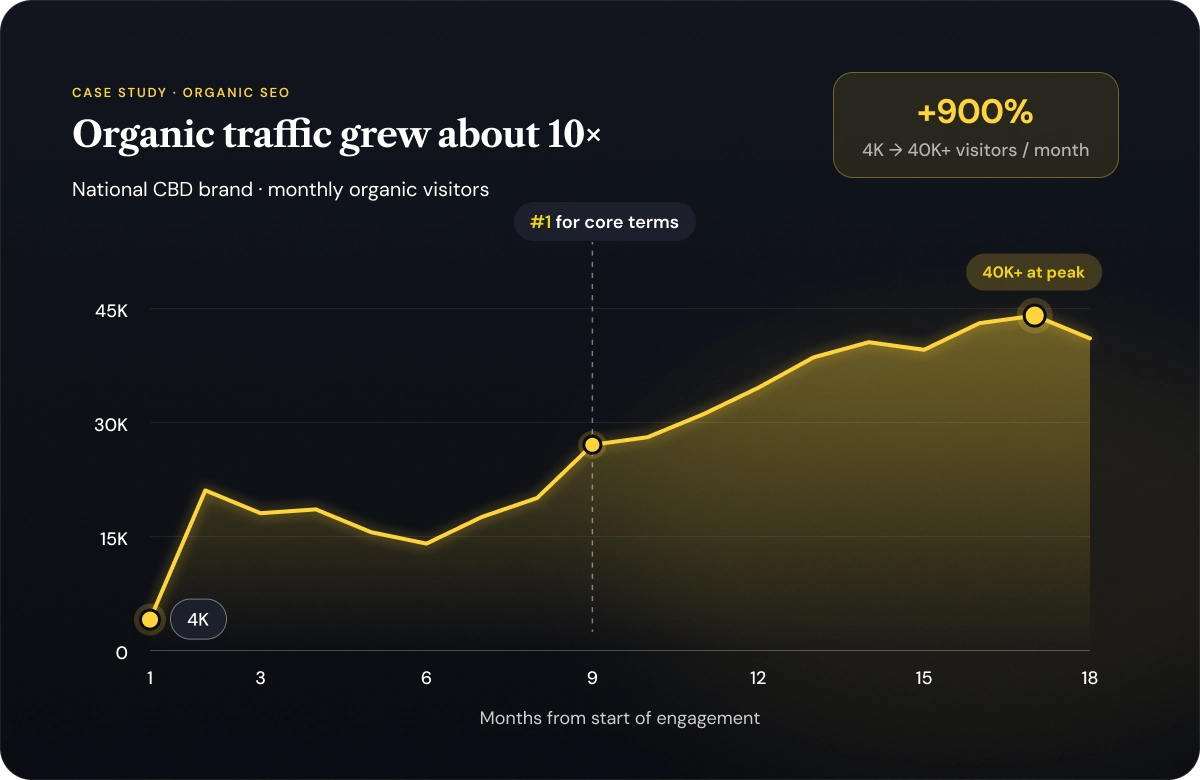
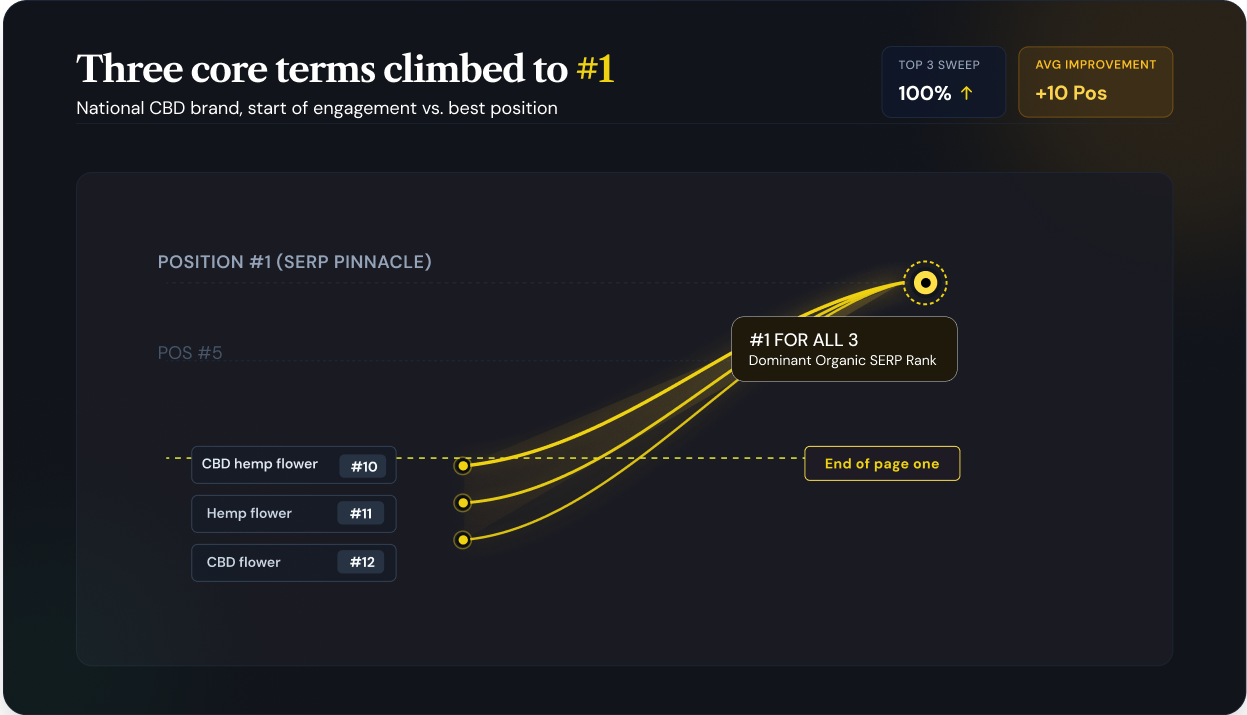
Google and Meta wouldn’t run this brand’s ads, and the rules changed state by state. We rebuilt its core pages, earned coverage in health and cannabis publications, and took it from #10 to #12 up to #1 for its three most valuable terms in about nine months. The company was later acquired.
The problem
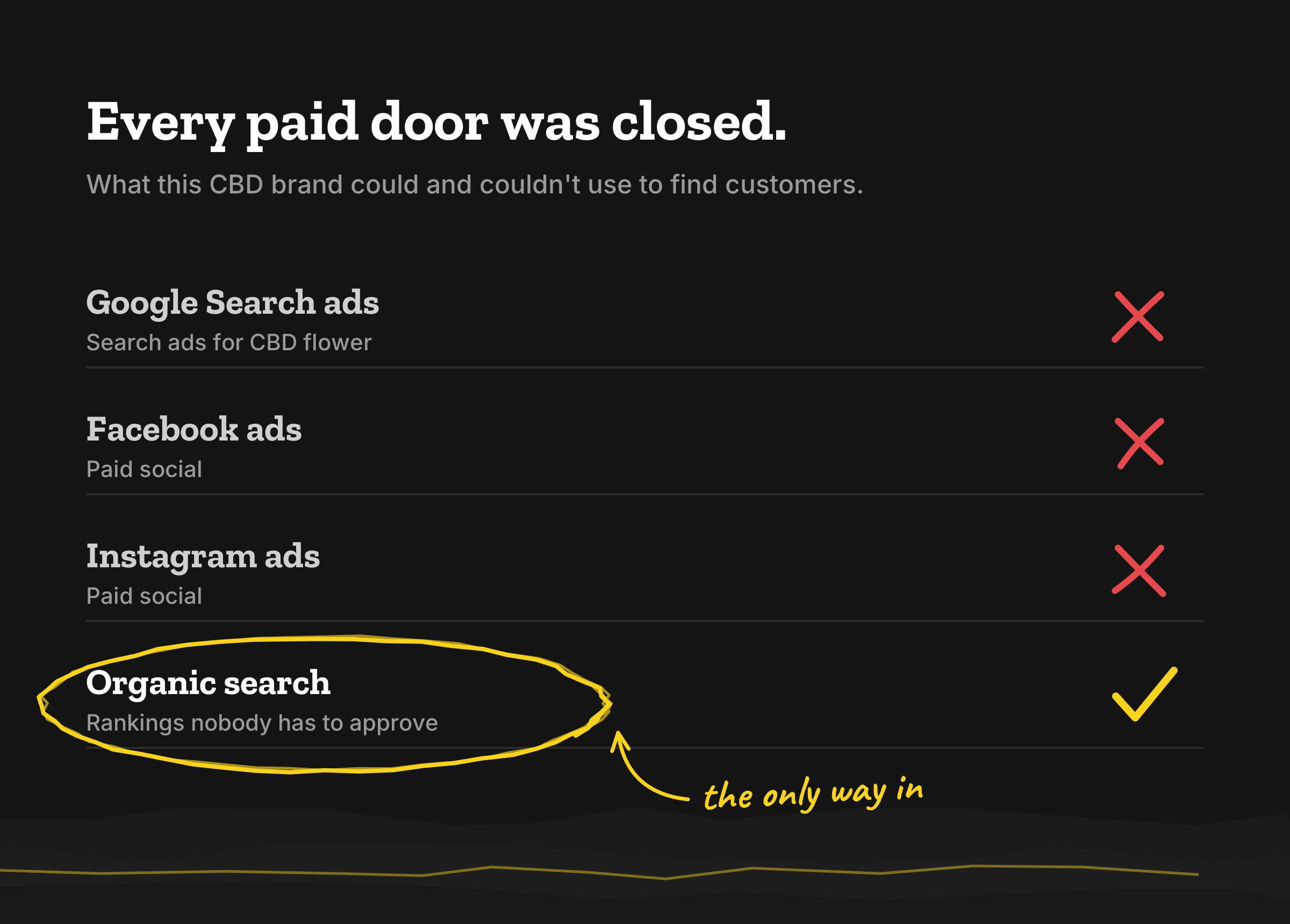
Most online brands can buy their first customers. This one couldn’t. At the time, Google and Meta would not run ads for CBD flower. The rules on what you could sell and say also changed from state to state.
The brand sold mostly direct to consumer, with some retail and a small amount of wholesale. Paid search and paid social were off the table. Organic search was the only way to scale online sales.
The terms that mattered were “CBD flower,” “hemp flower,” and “CBD hemp flower.” Together they draw about 17,000 searches a month in the US and about 25,000 worldwide. Every brand in the category wanted them, because none of them could buy traffic either.
Where they started
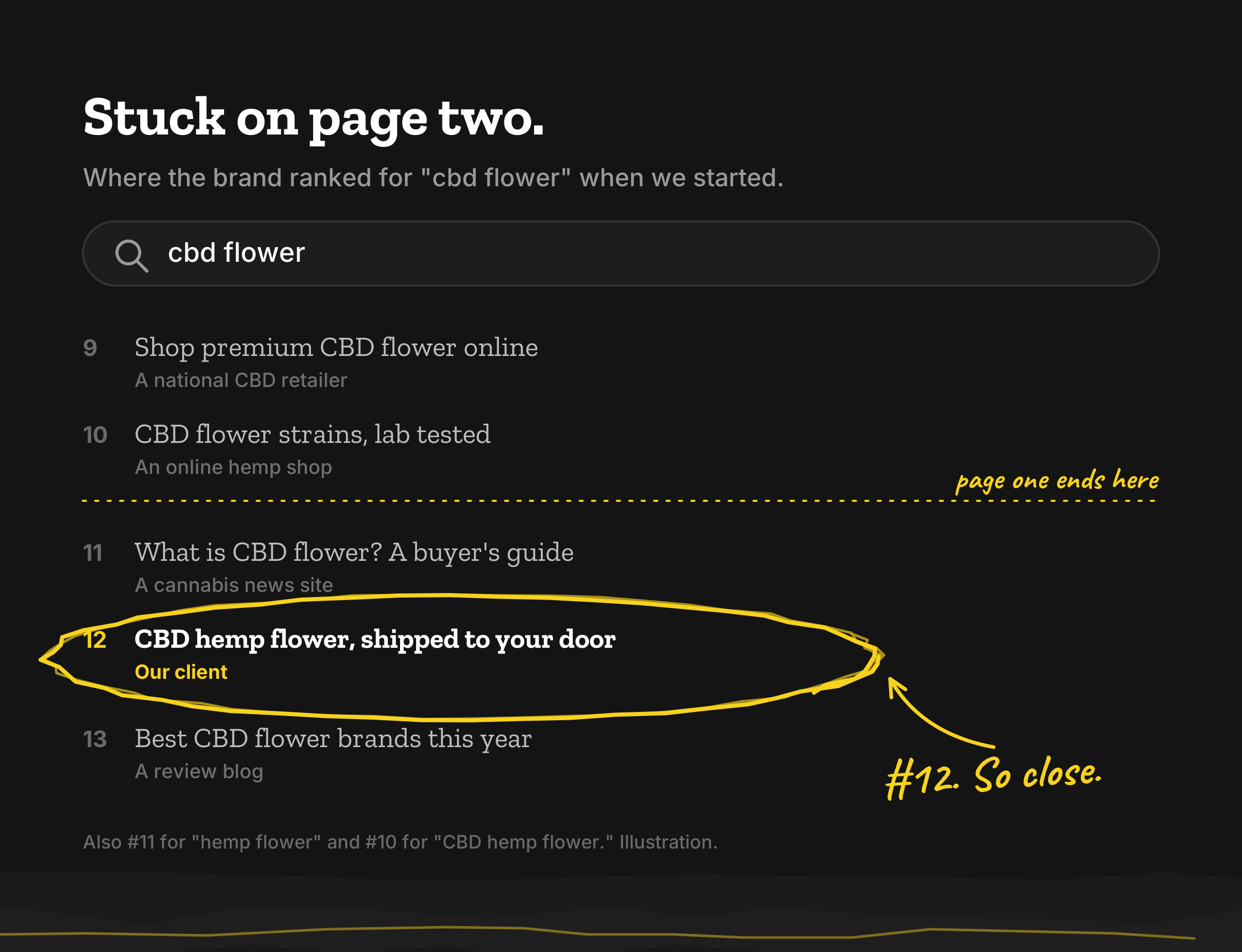
The site brought in about 4,000 organic visitors a month. It ranked #12 for “CBD flower,” #11 for “hemp flower,” and #10 for “CBD hemp flower.” Close enough to see the top spot, too far down to get many clicks. Two of the three terms sat on page two, where very few searchers ever look.
When we audited the site, the same problems showed up across the pages that mattered most:
None of these were unusual for the category. All of them were fixable.
What we did

Rebuilt the pages that mattered.
We started with the category and product pages tied to the core terms. They got faster load times, cleaner layouts, and easier paths to buy. We rewrote the content around what buyers were actually searching for.

Built for engagement.
Better pages kept people on the site longer, and more of them bought. As engagement rose, rankings rose. Higher rankings brought more traffic, which brought more engagement. That loop did more for this brand than any single tactic.

Built the brand’s reputation off the site.
CBD buyers are wary, and Google is cautious with the category. We ran heavy offsite work to make the brand look like the established, trusted name in the space. That meant placements on respected sites in medical, wellness, alternative medicine, and cannabis, plus coverage on major news and high-authority sites that tied back to the brand.
Results
The brand reached #1 for all three core terms in about nine months and held the top spot for several months. When a ranking slipped, we caught it fast and won the position back. Traffic kept climbing after that, peaking at about 10x where it started.
The company was later acquired. By then, organic search was the main driver of its online sales. After the sale, the founder reached out to thank us. In his words, we made him rich.
Sell CBD, hemp, or cannabis? You can still rank.
The ad platforms won’t take your money, and the rules shift by state. Organic search is the one channel nobody can switch off. We’ll show you where you stand, who’s ahead of you, and what it would take to pass them.
Related reading: What Google and Meta allow for CBD ads · CBD marketing without paid ads
